

Food – is not all about nutrients
Food is one of the sources of ‘prana’ or life force or energy. Science spells out nutrition in terms of carbohydrates, proteins, fats, vitamins, minerals, fiber and water.
But ever wondered how aboriginal tribes in Australia survived by eating lizards called Goannas in dry lands with very little water? It was not a nutrient balanced meal that they had, just some protein and maybe some vitamins and fat, yet they lived long lives. This is because their diet was from the habitat they lived in, hunting kept them physically fit, the diet was free from processed additives, and they had a ritual for cooking the meat.
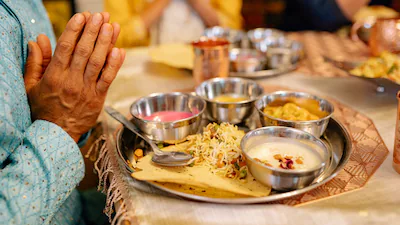
Today we view food in scientific light. Nutritionism (an ideology that encourages people to view food primarily as a delivery vehicle for nutrients like vitamins, fats, and protein) is raging and gaining popularity so much so that we get food, drinks and water today with labels that quantify the amount of nutrients. This is because food now is a product that we buy off shelves and most of us are cut off from the act of food production and processing. Food production has also been commercialized with farmers using fertilizers, hormones and chemicals to maximize production. Not everyone can afford organic foods, and we don’t know the authenticity of the organic product being sold. Greenwashing is very common.
In such an environment, how do we ensure that our diet is optimal? Contrary to popular view, nutritionism is not the answer. Nutritionism is the solution given by food marketeers. Whereas there is ample proof that long life and health is not a result of your nutrient intake. I once read of a village farmer lady who had just millet porridge every day and lived a healthy 90 plus years. Our health depends on a multitude of factors, not just food, like physical activity, regularity and our mental wellbeing. Yes, if you have specific goals like muscle building or sports then you might need to get into nutritionism. But for general health and everyday wellbeing its best not be intellectually focused on food.
Nutritionism reduces eating to a clinical, functional chore aimed at health optimization rather than a source of joy, comfort, and sensory satisfaction. It assumes that every human body process isolated nutrient identically, ignoring biochemical individuality, genetics, and the gut microbiome. Viewing food strictly through a nutrient lens weakens the social fabric of dining. It detaches eating from community, identity, history, and spiritual connection.
“Jaisa Ann, Vaisa Mann” is a profound Hindi proverb that translates literally to: “As the food, so the mind.” Our food defines our thoughts and energy. Hinduism and Ayurveda classify food into three categories Sattvic (fresh, mild and cooked with love), Rajasic (highly spiced, fried, stimulants), and Tamasic (stale, frozen, overprocessed, alcohol, meat). This philosophy posits that food acts as both physical fuel and mental nourishment, meaning what you eat directly affects your consciousness, mood, and overall well-being. Sattvic food is best for health and growth as it calms the mind, increases energy, and fosters compassion. Rajasic food causes aggression and tamasic food can be a reason for lethargy and ignorance.
The ancient Chinese civilization treats eating as a holistic medicine centered on balancing the body’s internal energy (Yin and Yang) through seasonal, flavorful whole foods. By prioritizing harmony, tradition, and communal dining over chemical analysis, it stands as a direct contrast to the reductionist approach of modern nutritionism. Historically, many foundational cultures viewed nourishment as an extension of the natural world, seeking to feed both physical vitality and spiritual clarity in harmony with their environment. Modern nutritionism successfully fuels the body, but it fails to nurture the mind.
Keeping the above in mind, I am sharing below the food philosophy I worked out for myself to optimize food in current times for a healthy and positive life.
- Go Cruelty free – Earlier people merely survived in the habitat they were in, like the Australian aborigines. But humans have evolved from rustic lifestyles. Today we have options, most importantly the option to be cruelty-free. Food has a major role to play in inculcating sensitivity towards other life. Every religion has rules for food, like halal food in Islam, avoiding meat on certain days in Christianity or a vegetarian diet in Hinduism. While religions adapted to the region, they endorsed the underlying ideology of inculcating in humans a sensitivity towards other life. Cruelty free food leads to an empathetic mind.
- Cook your own food – Food is a transfer of energy, and this includes the energy with which food is grown and cooked. The thoughts (vibrations) of the person who cooks the food have an impact on the quality of the food. Ever wondered why the food your mother cooks, no matter how prefect or imperfect, is the best food for you? Because it is made with love or positive vibrations. The Australian aborigines had a ritual to cook the lizard they caught. The way the food is processed has a profound impact on the quality of energy it delivers. A kitchen is a sacred place, and the act of cooking is sacred service. Preserve it. If you can grow your own food that would be even better but that is not practical in most cases.
- Have a regular diet time – When you establish a highly predictable routine, your body optimizes digestion. Our digestive system operates on a strict internal biological clock. This rhythm is controlled by your circadian cycle, which regulates everything from your sleep to your metabolism.
- Have a moderate diet – Going without food or eating one meal a day on a regular basis is not recommended. One has to have a measured or moderate diet. As per yogic texts, the stomach is roughly divided into four sections. When eating a main meal, two sections should be filled with food, one section with liquid other than water like soup, dal or diluted lime water and the remaining section should be left empty. This one quarter must be left empty for better digestion and energy levels.
- Supplement your diet where possible – This is where science steps in. Include raw vegetables, fruit, nuts and seeds in your diet, when possible, to supplement your body with nutrients you might not get from regular meals. Try to supplement your diet but do not be obsessed with it. Remember our health depends on a multitude of interrelated factors and not nutrients alone.
- Eat local and in season – Advanced agriculture now ensures food is grown in all climatic conditions and places. Try to eat fresh local produce as much as possible. This is not only good for the planet but also good for you as food grown nearby in its natural season possesses the highest life force (Prana or energy) and nutritional value.
- Have tasty food – Taste is a critical element of eating. Taste is not just a luxury; it is a biological necessity for healthy digestion and well-being. True satisfaction from a meal comes from two things: physical fullness and mental satiety. If you eat a meal that is healthy but completely tasteless, your brain remains unsatisfied. This leads to psychological hunger, which often causes cravings and overeating later. Making food that is healthy and tasty at the same time is a skill. At the same time, having a taste for healthy food is also something that needs to be worked on.
- Avoid unhealthy habits – To cultivate a healthy mind and a balanced digestive system, you should avoid unhealthy habits like consuming highly processed foods, refined sugars and artificial additives while also reducing deep-fried items, stimulant beverages like tea and coffee, and late-night eating.
Managing household food is a skill and a job in itself. This is one of the reasons why every home requires a good homemaker. Without proper household food management, individuals are susceptible to food marketeers. Humans seek control and food marketeers understand that. The truth is we are only capable of living with love, and it is the almighty who holds our reins.
Popular Posts



Copyright © 2024 WeGujarati. All Rights Reserved. Designed By The Creativity Studio